Being serious about improving climate impact includes setting ambitious targets. But what is ambitious enough? The world class method of climate-related target setting is the Science Based Targets initiative (STBi).
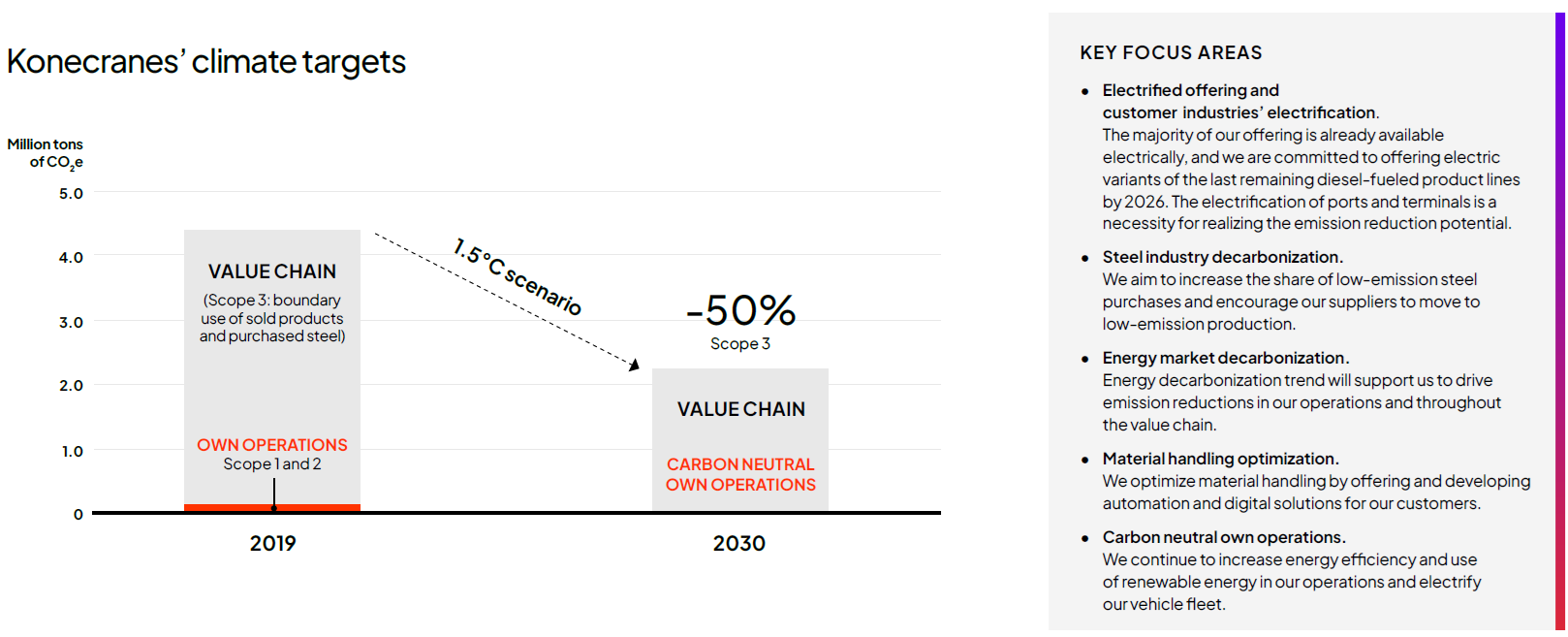
In January 2022, Konecranes announced Science Based climate targets that have been validated by SBTi. The targets drive Konecranes’ efforts to minimize emissions by developing its low-carbon and circular portfolio and investing in energy efficiency. Konecranes commits to reduce its Scope 1 and 2 emissions by 50 % until 2030. For Scope 3, Konecranes aims to reduce absolute carbon emissions by 50 % until 2030, encompassing the use of sold products and steel-related purchases. The target covers over 70 % of Konecranes’ value chain emissions.
“Targets approved by the SBTi are proof that the targets are in line with the latest climate science in terms of limiting global warming to 1.5°C above pre-industrial levels, as stated in the Paris Agreement,” Virta-Toikka explains. “One aspect that makes these targets so ambitious is that all SBTi-approved targets must cover so-called Scope 3 emissions. This means that it’s not enough to reduce emissions in your own operations; you need to do so in the entire value chain, from raw material sourcing to product end-of-life.” Value chain emissions are currently more than 99% from Konecranes emissions screening.
“We did massive calculations to ensure that we have all the required data,” says Virta-Toikka. “We will continue to focus on providing eco-efficient solutions for our customers to support them in reaching their climate targets and to decarbonize material handling.”
Regarding Scope 1 and 2 emissions, Konecranes has already reached the science-based emission reduction target, but will further continue to decarbonize its own operations by investing in renewable energy and improving the fuel and energy efficiency of its fleet and production processes. Currently, all Konecranes factories operate with 100% renewable electricity.