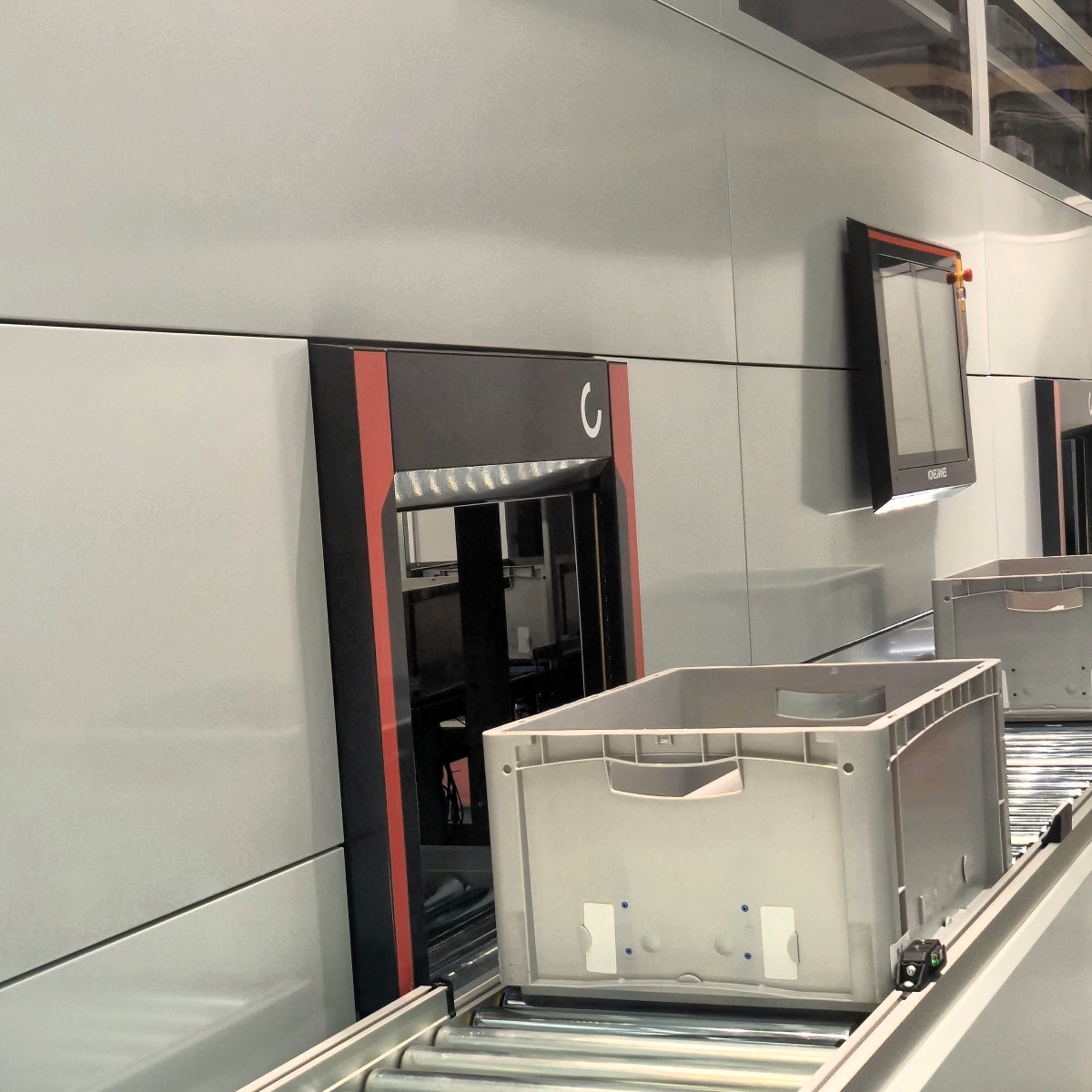
In modern manufacturing, as customers demand more customized product variants to meet their specific needs, the number of small, different parts required for these variations has increased significantly. For example, an industrial drill manufacturer might have 10 products, each with 10 variants. Each product variant contains 10 unique parts, in addition to 30 parts that are common to all products and variants. To produce all these variants, the manufacturer needs to manage between 2,000 and 4,000 parts. Additionally, even parts that seem similar, such as seals, may differ slightly, for instance, by being made from different materials depending on the variant.
If you manufacture many product variants, you are likely familiar with the challenges described above. Your warehousing operation may struggle to manage the balance between unique and common parts as it supports production. Take shims as a simple example. They are small yet critical machine components. There are numerous shim shapes and sizes, which can be difficult to distinguish even for a trained eye. The complexity increases further when considering the wide variety of materials used to make shims. Selecting the correct shims is essential in manufacturing product variants, and that is just one example.
Most product parts are stored or warehoused before use in production. This is especially true for parts that cannot be individually labelled, such as special bolts, small unique components, sub-assemblies, and similar items. These parts must be identified and tracked to ensure they are picked correctly for production. When thousands or even tens of thousands of orders are processed daily, errors caused by haste directly result in defective products and delayed deliveries, triggering a costly domino effect. Therefore, part storage and picking processes must actively prevent picking errors to maintain quality and efficiency.
Cost of picking errors
Picking errors are potentially catastrophic in manufacturing because they can unleash an avalanche of margin-eating costs. The most immediate cost is often the use of courier services to urgently deliver the correct parts to customers who have received a product but are unable to use it. But that is just the tip of the iceberg. Handling the claim and identifying the root cause of the error burdens the entire operation. If inventory allows, you may have enough parts to send the correct replacements afterwards. You must absorb the costs of rushed delivery and disruption to regular operations, expenses that you could have avoided. In the worst case, insufficient inventory causes further delays and a cascading impact across the supply chain.
If picking errors are frequent, customer relationships suffer, and you risk losing revenue to competitors. Perhaps one customer received the last, but incorrect, part that another customer needed. Now you have two issues to resolve. How can we avoid this painful "drawing empty" scenario? One option is to maintain a high inventory buffer, although this increases costs. Another is to perform perpetual inventory counting, which is a tedious process and does not address the root cause.
When you discover unavailability too late
The worst scenario occurs when a missing part is discovered during production or while preparing an order for shipment. Even a single unavailable part can stall the entire variant, tying up capital in work-in-progress and blocking inventory that could otherwise complete other variants. Missing parts not only cause inconvenience but also significantly delay and disrupt operations. At best, they waste valuable time; at worst, they bring production or shipment to a complete halt.
The risk of tacit knowledge
In many operations, critical knowledge, such as the location of specific parts or how to identify them, is often held in the minds of experienced employees. When those individuals leave, the tacit knowledge they possess also leaves with them. Without a precise and reliable picking system, the onboarding process for new personnel can be slow and inconsistent. Implementing a robust and straightforward picking process is crucial for maintaining efficiency and operational continuity.
Picking the right parts
Investing in warehouse software and automation is essential to prevent picking errors; however, selecting the right solution is not always straightforward.
Many warehouse systems focus on managing inventory and guiding picking without directly controlling which item is presented to the operator. When operators face too many choices, the risk of picking errors increases. For example, shelves filled with bins of similar-looking items increase the chance of picking the wrong part. Presenting only the correct item to the operator can significantly reduce this risk.
ERP and WMS systems play an important role in managing inventory data, orders, and workflows. However, picking accuracy also depends on what happens physically at the point of picking. Connecting warehouse software with automated storage, guided picking, and accurate transaction data can help reduce the risk of errors.
The ideal picking environment
In an ideal scenario, the system presents the correct part directly to the operator, significantly reducing the risk of picking errors. Systems like pick-to-light use lights or lasers to guide the picker to the correct item. However, they are not foolproof. Items may be misplaced or picked incorrectly despite the guidance. The process becomes more straightforward and unambiguous when you make only the correct item available.
Picking the right amount
It is not just about picking the correct part. Selecting the proper quantity is equally important. One method is weighing. When parts are stored, their weights are recorded along with the total number of units in the container. During picking, the removed parts are weighed again to verify that the correct quantity has been picked.
Key takeaways: ensuring accuracy in variant manufacturing
- Product variant complexity: Modern manufacturers must manage a massive increase in unique parts and subtle variations, even for small components like shims, which can create critical challenges.
- The cost of picking errors: Mis-picked parts can lead to production delays, increased operational costs, lost inventory, and customer dissatisfaction.
- Storage and picking processes matter: Traditional warehousing can make it difficult to manage unlabeled, similar-looking parts such as bolts and seals.
- Manual processes are vulnerable: Even trained staff can make mistakes; reliance on human memory and "silent knowledge" poses a risk during staff transitions.
- Connected systems improve accuracy: Combining warehouse software with automated storage, guided picking, and accurate transaction data helps reduce the risk of picking errors.
- Automation reduces picking errors: Systems that present the correct part directly or guide operators visually can significantly reduce the risk of errors.
Vesa Hämetvaara
Director, Agilon Business
email: vesa.hametvaara@konecranes.com
Teemu Oittinen
Director, Agilon Solution Sales
email: teemu.oittinen@konecranes.com
WAREHOUSE PICKING AUTOMATION
Improve picking beyond accuracy
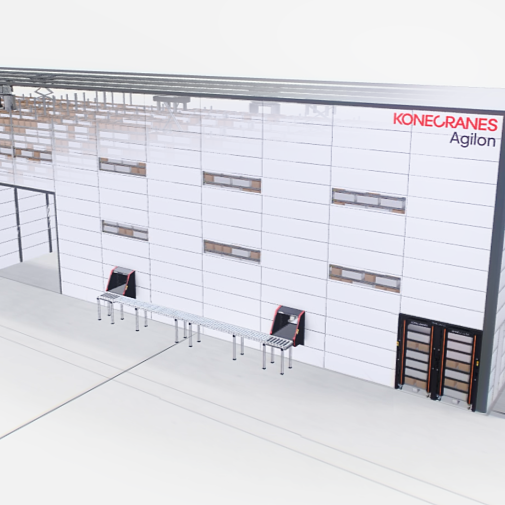
See how Agilon combines automated storage and retrieval, guided picking, real-time inventory visibility, and connected material flow to improve picking accuracy and keep materials moving.