Overhead cranes should be able to travel along their runway rails without binding or excessive skew. Overall performance depends heavily on the condition and alignment of the runway and poor rail alignment can set off a chain reaction—accelerating wheel and rail wear and, over time, contributing to structural fatigue.
What causes a crane to travel incorrectly on the runway?
1. Improper installation
A runway that wasn't installed to specification and tolerance can lead to premature wheel and rail wear, along with other crane and component issues.
2. Misaligned or worn rail
Poor runway alignment can cause crane flanging, skewing or binding. It also adds excessive stress to the runway beams and accelerates wheel and rail wear.
3. Missing clips
Clips secure and support the crane rail, keeping it from shifting as the crane travels along the runway. When clips go missing, the rail loses that stability.
4. Worn pads
Rail pads reduce shock and vibration in the rail system. Positioned under the rail, they distribute load over a larger surface, eliminate load concentration and the fatigue stress that comes with it, and help center loads on the supporting element. Pads also compensate for uneven contact surfaces between rail and support, cut down on noise and vibration, and seal the gap between the rail and the support beneath it.
5. Crane geometry
Incorrect crane alignment can lead to premature wheel and rail wear, structural component failures or drive faults.
Improper tracking should always be investigated with a runway survey. But how that survey is performed matters. Traditional methods using conventional surveying instruments and manual measurements often mean days of costly downtime, and the results aren't always clear or accurate.
Two better ways to survey your runway
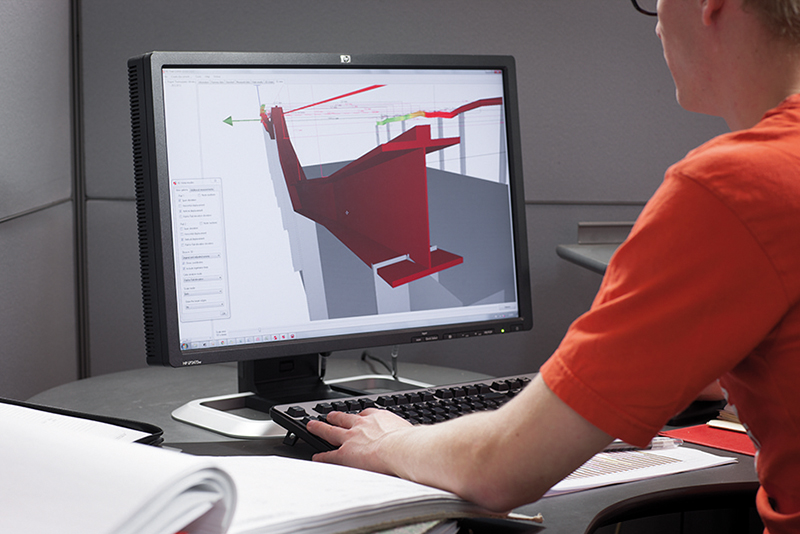 Our RailQ Runway Survey uses a remotely operated robot to deliver accurate, in-depth data on rail alignment, including span, straightness, elevation, and rail-to-rail elevation. Because a robot, not a technician, travels the rails, the survey is faster and safer than traditional methods. It's suitable for most crane types and offers a quicker lead time for reporting, making it a strong fit for supplementing existing service programs.
Our RailQ 3D Runway Survey takes the assessment further with high-definition 3D laser scanning and point cloud data analysis. Beyond span, straightness, and elevation, it captures rail-to-girder eccentricity, rail wear, girder condition, and girder camber and sway. The scan generates millions of data points, producing accurate 3D crane bay views complete with geotags and adjusted runway drawings. That depth of detail helps crane owners make confident, well-informed decisions about safety and long-term reliability.
With either survey, Konecranes engineers review the collected data and recommend corrective actions. Automated software calculates the most efficient way to bring the runway back into alignment with required standards—a task that's extremely difficult to do by hand. In practice, that means fewer locations on the runway need to be touched, keeping corrective work cost-effective.
Other reasons to schedule a runway survey
A runway survey isn't only for troubleshooting existing problems. It's also good practice in several other situations:
Installing a new runway. A baseline survey confirms the runway meets specification before a crane ever runs on it.
Adding a new crane to an existing runway. Verifying the runway's condition and alignment ahead of time helps confirm that it is capable of safely and efficiently supporting the new crane while helping reduce the chance of last-minute surprises that can cause delays or unplanned costs.
Increasing capacity on an existing crane. A higher-capacity crane places new demands on the runway, and a survey confirms it can handle the added load.
Planning a crane modernization. A survey provides the runway data needed to scope the project accurately and avoid surprises once work begins.
Suspected crane overloading. If overloading is a concern, a survey can help reveal whether the runway or crane geometry has been affected and guide the right corrective response.
Whether you're troubleshooting a tracking issue or planning ahead, a runway survey can give you the data you need to keep your crane runway safe, reliable and cost-effective to maintain.
Contact us to schedule a runway survey
Contact us
