Overhead crane hoists are designed to lift loads straight up. A side pull happens when an operator begins hoisting before the bridge and trolley are positioned directly over the load. As the load leaves the ground at an angle, it swings toward the point directly beneath the hook, creating a pendulum effect that the operator must then fight to control.
The hazards of side pulling
Hoist components are built for straight-line loading, so an angled pull puts stress on parts never meant to handle it. The wire rope suffers first: instead of spooling evenly, it rubs against the rope guide and drum flanges, accelerating fraying and fatigue. That same friction grooves, bends or cracks the rope guide and drum well ahead of schedule. Once the rope stops winding correctly, it can pile up or jump the groove, worsening wear with every lift. Even the crane's structure takes on lateral forces it wasn't designed to absorb repeatedly.
Beyond equipment wear, side pulling is a genuine safety hazard. A swinging load can strike nearby structures, equipment or people, and the operator can lose control of where it's headed. “One of the main risks for an operator is load swing, which can damage the load or cause injury. In extreme cases, there might be a load drop,” says Anton Shcherbakov, Development Engineer, Asset Intelligence Development at Konecranes.
Side pull prevention helps operators make safer lifts
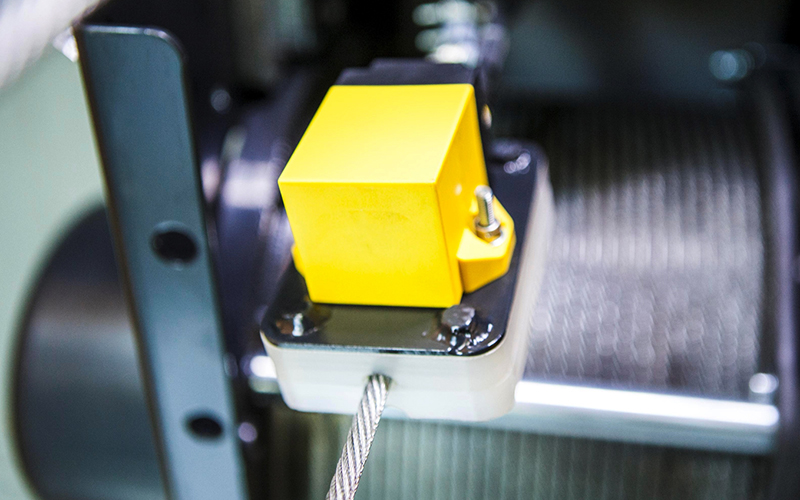 The frequency of side pull-related accidents and maintenance issues drove Konecranes to develop side pull prevention. “Side pull prevention is intended to protect the crane from the harmful effects of side pulls; side pulls cause wear to components, so preventing it could lead to increases in both the safety and the lifetime of the components,” says Jukka Paasonen, Konecranes Director, Global Technical Support and Quality in Service.
The system works through a simple mechanism: an inclinometer continuously monitors the rope's angle. If the angle exceeds a set limit, side pull prevention halts hoisting and triggers a warning light and sound, alerting the operator that the lift is happening outside the set load angle. When the operator repositions the hoist directly over the load, hoisting can resume.
Benefits of side pull prevention
The upside of catching side pulls early shows up in a few different ways. On the maintenance side, components like the rope, rope guide and drum simply last longer, since they're no longer absorbing the wear caused by repeated off-angle lifts. That translates into fewer repairs and replacements over the crane's working life, which adds up to real cost savings.
On the safety side, the benefit is more immediate: because the system stops hoisting before the load even leaves the ground at an angle, it minimizes the risk of load swing, struck-by incidents, and load drops before they can happen. There's also a coaching effect built in. The audible and visual warning doesn't just correct the lift in the moment; over time, it helps operators recognize and avoid the habits that lead to side pulls in the first place.
And because Side Pull Prevention can be retrofitted onto existing cranes that meet the criteria, operations don't need to invest in a new crane to get these benefits. As Paasonen puts it, “It's an easy mountable solution that is designed to improve safety and reduce maintenance costs caused by incorrect crane operations.”
Contact us to add side pull prevention to your crane
Contact us
