Every time a crane lifts a load, machinery components in the hoist accumulate wear. That's simply the nature of mechanical equipment. Components experience fatigue over time, and as they do, the theoretical service life of the hoist gradually decreases. Left unaddressed, this means a higher risk of failure, unplanned downtime and costly emergency repairs. A general overhaul is how you reset the clock.
What is a general overhaul?
A general overhaul is a full refurbishment of a hoist unit designed to restore it to a condition comparable to new. Certain components are replaced based on their designed fatigue life, while the technician inspects the rest and recommends repair or replacement as needed. Once complete, the hoist is tested, the work is documented and the unit is assigned a new Safe Working Period (SWP). In practical terms, it's a fresh start for your equipment.
When is a general overhaul required?
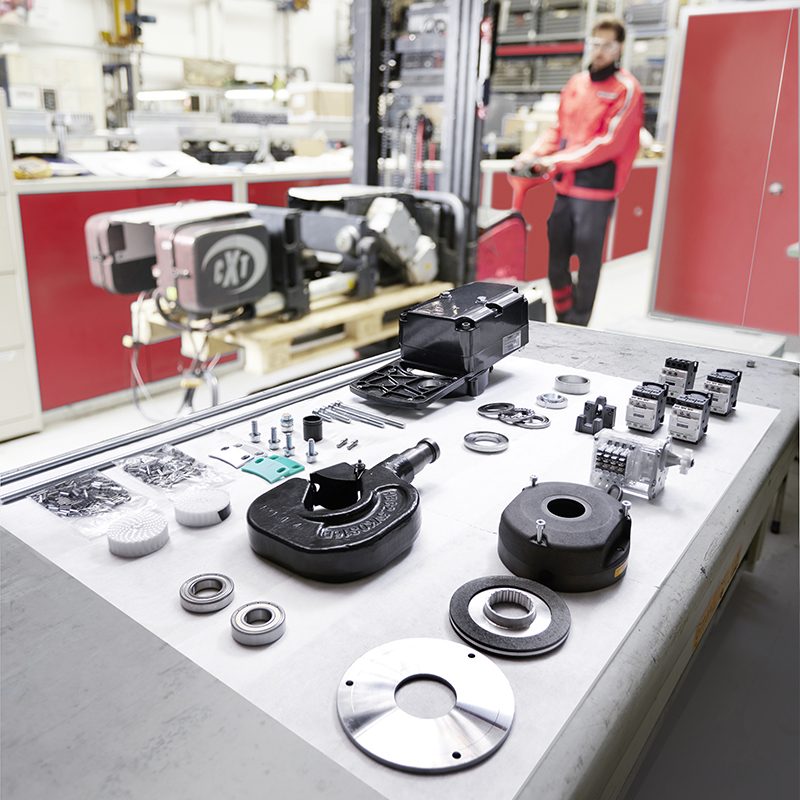 In many countries, regulations require that power-driven rope and chain hoists, as well as crane hoist units, be taken out of service once their theoretical duration of service has elapsed, unless a general overhaul is carried out first. Beyond the regulatory angle, crane manufacturers typically require an overhaul or full hoist replacement before the end of the hoist's Design Working Period (DWP).
As a rule of thumb, a general overhaul should be performed when the remaining SWP falls below 10%. If you're not sure where your hoist stands, a special assessment should be carried out after 10 years of service to determine whether an overhaul is needed.
Keeping track of your remaining SWP doesn't have to be complicated. Hoists equipped with a condition monitoring unit display the SWP directly on screen. If your hoist is connected to TRUCONNECT Remote Monitoring, you can see the remaining design working period on the Konecranes Portal. And for longer-range planning, a Design Life Analysis gives you an estimate of the limit for safe operational life so you can schedule overhauls in advance.
What’s the benefit of an overhaul?
Beyond staying on the right side of regulations, a general overhaul helps maintain equipment performance and availability. Replacing components before they fail means fewer surprises on the production floor and less unplanned downtime—which in demanding operations can be far more costly than the overhaul itself. Genuine spare parts are used throughout, which means the quality level after the overhaul matches that of a new hoist. And because it's a planned activity, it can be coordinated around your production schedule rather than forced on you at the worst possible moment.
When is replacing the hoist the better call?
A general overhaul isn't always the right answer. There are situations where replacing the hoist outright makes more sense.
The first thing to look at is the remaining structural life of the hoist. If less than 50% of the designed life remains in the steel structure, an overhaul isn't advisable as there's a risk that the hoist frame could fail before the next overhaul cycle would be due.
Cost is another factor. Given the number of components involved, a new hoist may be more cost-effective than an overhaul, especially if additional damage is discovered during the assessment. When the combined cost of the overhaul and unplanned replacement parts starts approaching the price of new equipment, the calculation tips in favor of replacement.
Downtime matters too. A general overhaul assessment and component replacement can take several days under the best circumstances and longer if parts need to be ordered. For operations where downtime is expensive, the faster turnaround of a new hoist installation can actually lower the total project cost when lost production time is factored in.
Finally, if your hoist model is no longer in production, parts may be hard to find, which drives up costs and lead times and limits long-term reliability. In that case, upgrading to current technology is usually the more sensible path forward.
The value of an informed decision
A general overhaul is a smart investment in equipment that still has good life ahead of it—it helps keep you compliant, reduces risk, and extends the working life of a hoist you already know and rely on. But it's not a blanket solution. Understanding where your hoist stands in terms of structural life, cost and parts availability will help you make the right call between an overhaul and a replacement.
Contact us to schedule a general overhaul. And replacing your hoist is a better option, check out our hoist replacements.
Contact us
