Material Flow Engineering Study

Build a smarter material flow strategy with simulation

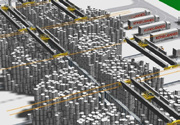
The Konecranes Material Flow Engineering Study is designed to provide a comprehensive analysis, design and optimization strategy for the movement of materials within a production system.

Our engineers use highly accurate and dynamic simulation models to assess and verify capacity and performance. From this analysis, we provide recommendations on system design and capacity, the number of overhead cranes and performance requirements, as well as insight in the operational rules of such a system.

The engineering study can be applied in a wide range of applications as well as intralogistics systems such as cranes, forklifts, high bay storage systems, conveyors, trucks and trains.

Experience in a range of industries and applications

Pulp

Paper

Aviation

Automotive

Steel

Scrap

Benefits of an engineering study

  • Provides a validated concept, verifying the feasibility and effectiveness of a proposed solution.
  • Provides optimized layout recommendations for facility design to achieve the best material flow.
  • Assists in defining needs and making strategic choices, especially in early project phases when requirements may be unclear.
  • Offers a foundational design framework for projects.

Simulation-driven insights for smarter material flow decisions

We use simulation models to provide a clear, data-backed picture of how materials move through a facility and where improvements can be made to boost safety, efficiency and throughput. Depending on project needs, we offer different levels of simulation. The right level is determined by factors like whether a project is greenfield or brownfield, how much process detail is already defined, and how much confidence is needed before moving forward.

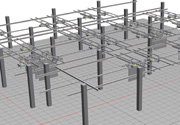
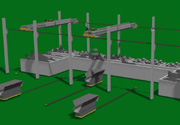
Die handling simulation

Process visualization

Simulation models including system components show how materials would move through a facility and how the system would behave, built on reasonable, common-sense assumptions about movement and timing. This visualization helps bring the concept to life and makes it easier to explain, without the extra time and cost required to develop detailed process data.

CORE DELIVERABLE
Animated visualization of the process.

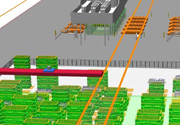
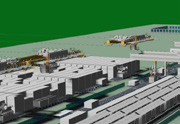
Paper roll simulation with process times

System simulation

This simulation incorporates defined process times, equipment behavior, and process inputs like how often materials arrive at the system. With this detail built in, different scenarios can be run to see how the system performs, answering questions like how much it can handle, where bottlenecks form, and how efficiently it runs.

CORE DELIVERABLE
Concrete statistics and KPIs relevant to the business—like throughput, utilization, and wait times.

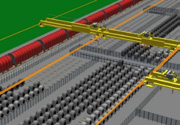
Pulp bale simulation

Benchmarked simulation

Simulation results are validated against an existing system to verify accuracy. If a direct comparison isn’t available, detailed modeling of selected process steps will be used for validation with customer approval. This validation provides greater confidence in the results before using them to make major decisions.

CORE DELIVERABLE 
Customer-approved KPIs with a high degree of confidence in result accuracy.

Paper roll simulation in WMS

Virtual commissioning or emulation

The simulation model is connected with your real or virtual control systems (such as a PLC or warehouse management system) to test the actual control logic, interfaces, and system behavior—essentially a dress rehearsal for your control software. It’s useful when the goal is to catch issues with system logic and integration before anything goes live.

CORE DELIVERABLE 
Verified control logic and a lower risk of surprises during commissioning.

Our approach

Define objectives or current state
We work with you to define and develop key objectives and goals for operations.
Input performance data
We gather your expectations for key performance data in new plants or targeted efficiency improvements in existing facilities.
Simulation and analysis
We use the data to create simulation models of the plant and analyze the results.
Output and optimization
We review the simulation results and compile them into a report to give you a clear understanding of potential improvements.

Your partner in end-to-end material flow solutions

For decades, we’ve supported process industries with reliable, integrated lifting and material handling solutions—designed to improve efficiency and reduce risk. Our in-house engineers support planning, delivery, commissioning and service, with deep knowledge of process demands and reliability needs. Whether for new builds or facility upgrades, we provide expertise spanning cranes, high-bay storage, forklifts and other material handling technologies to help improve efficiency, reliability and safety.

Get in touch with our experts to see how a Material Flow Engineering Study can benefit your operations.

Interested? Contact us

Yes, I am interested in receiving news updates and marketing information about Konecranes products and services.